
Anastasiia Soldatenkova
CEO, RCIC
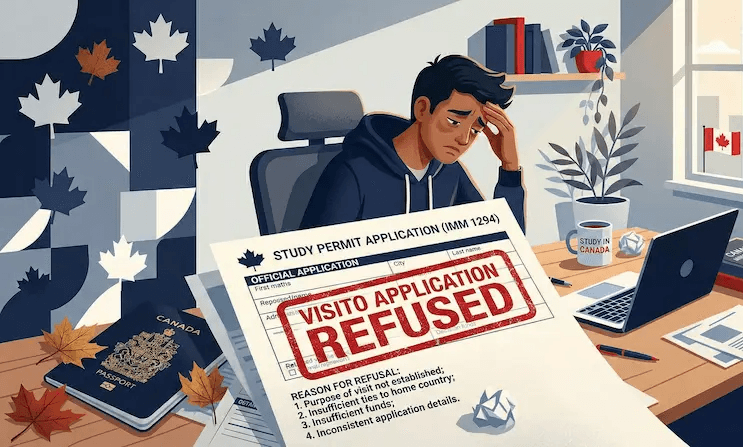
In this blog, we'll walk you through the five most common study permit mistakes that lead to refusal, and more importantly, show you exactly how to avoid them.
Imagine this: you've spent months researching Canadian universities, preparing your application, and dreaming about your future as an international student in Canada. You submit your study permit application with hope and excitement — only to receive a refusal letter weeks later. The disappointment is crushing, and worse, you're not entirely sure what went wrong.
Study permit refusals happen more often than you might think, but here's the good news: most refusals are preventable. The vast majority of rejections stem from a handful of common mistakes that applicants make when preparing their documents or filling out their forms. Understanding these mistakes — and knowing how to avoid them — can be the difference between a refusal and an approval.
1. Insufficient Proof of Financial Support
One of the top reasons Immigration, Refugees and Citizenship Canada (IRCC) refuses study permit applications is insufficient proof of funds. IRCC needs to be confident that you can afford your tuition fees, living expenses, and return transportation without needing to work illegally or rely on public assistance.
Common mistakes include:
Providing bank statements that are too recent or show a sudden large deposit (which raises red flags about borrowed money)
Failing to show a consistent financial history over several months
Not accounting for all costs — tuition, accommodation, food, transportation, and personal expenses
Submitting documents that aren't properly translated or notarised
How to avoid this mistake:
Provide bank statements covering at least 4–6 months to demonstrate stable, consistent funds
Include a clear breakdown of how you will cover tuition and living expenses (approximately CAD $20,000–$25,000 per year depending on the province)
If someone is sponsoring you, include a notarised affidavit of support, proof of their income, and their relationship to you
Ensure all financial documents are translated into English or French by a certified translator.
2. Weak or Generic Study Plan (Letter of Explanation)
Your study plan — also called a Statement of Purpose or Letter of Explanation — is your chance to tell your story. It explains why you want to study in Canada, why you chose your specific programme and institution, and how this education fits into your long-term career goals. A weak, generic, or unconvincing study plan is a major red flag for visa officers.
Common mistakes include:
Using a template without personalising it to your situation
Failing to explain why you chose Canada over your home country or other destinations
Not connecting your past education and work experience to your chosen program
Ignoring how this degree will benefit your career when you return home
How to avoid this mistake:
Be specific. Explain exactly why this program at this Designated Learning Institution (DLI) is the right fit for your goals
Show a clear connection between your previous education or work experience and your chosen field of study
Demonstrate genuine intent — explain how this Canadian qualification will enhance your career prospects, particularly in your home country
Keep your tone honest and personal. Visa officers can spot a generic letter immediately.
3. Failing to Demonstrate Strong Ties to Your Home Country
IRCC wants to ensure that you intend to leave Canada once your study permit expires (unless you transition to another legal status, such as a Post-Graduation Work Permit or permanent residency). If a visa officer believes you may overstay or work illegally, your application will be refused.
Common mistakes include:
Not providing evidence of family, property, employment, or other ties to your home country
Applying from a country with high overstay rates without addressing this concern directly
Failing to explain your intention to return home after completing your studies
How to avoid this mistake:
Include evidence of strong ties: family relationships, property ownership, a job offer waiting for you, or business interests in your home country
In your study plan, clearly explain your intention to return home and how your Canadian education will benefit your career there
If you have previously travelled to other countries and returned home, mention this to demonstrate your history of compliance with visa conditions.
4. Choosing the Wrong School or Programm
Not all schools in Canada are eligible to host international students. Your institution must be a Designated Learning Institution (DLI) — a school approved by a provincial or territorial government to accept international students. Applying to a non-DLI school will result in an automatic refusal.
Additionally, choosing a program that doesn't align with your background can raise concerns about your genuine intent to study.
Common mistakes include:
Applying to a school that is not a DLI
Choosing a program that has no logical connection to your previous education or work experience
Enrolling in a program that appears to be a step backward in your academic progression (e.g., applying for a diploma when you already hold a master's degree)
How to avoid this mistake:
Always verify that your chosen school is a DLI by checking the official IRCC list
Choose a program that makes sense given your academic and professional background
If your chosen program seems like a departure from your previous studies, explain why in your study plan with clear, logical reasoning
Work with an immigration consultant who can help you assess whether your school and programme choices will strengthen or weaken your application.
5. Incomplete or Incorrect Documentation
This may sound simple, but incomplete or incorrect documentation is one of the most common reasons for study permit refusals. Missing a single required document, submitting an expired passport, or providing forms with errors can result in delays or outright refusal.
Common mistakes include:
Forgetting to include required documents such as a letter of acceptance, passport copies, or biometrics confirmation
Submitting documents in the wrong format or language
Providing outdated or expired documents
Making errors on forms (incorrect dates, misspelled names, incomplete sections)
How to avoid this mistake:
Use the IRCC document checklist for study permit applications and tick off every item as you gather it
Double-check that all forms are filled out completely and accurately
Ensure your passport is valid for the entire duration of your intended stay
Have all non-English or non-French documents translated by a certified translator
Review your entire application at least twice before submission — or better yet, have a professional review it for you
Final Thoughts: Don't Leave Your Future to Chance
A study permit refusal can feel like the end of your Canadian dream, but it doesn't have to be. Most refusals happen because of avoidable mistakes — mistakes that can be prevented with careful preparation, attention to detail, and expert guidance.
If you're planning to apply for a study permit, or if you've already been refused and want to reapply, don't go through the process alone. A small error can cost you months of delays and thousands of dollars in lost opportunities.
Navigating Canada's immigration system can be complex — but you don't have to do it alone. Book a consultation with Elbrus Immigration Inc. today and let us help you submit the strongest possible study permit application.