

Anastasiia Soldatenkova
CEO, RCIC
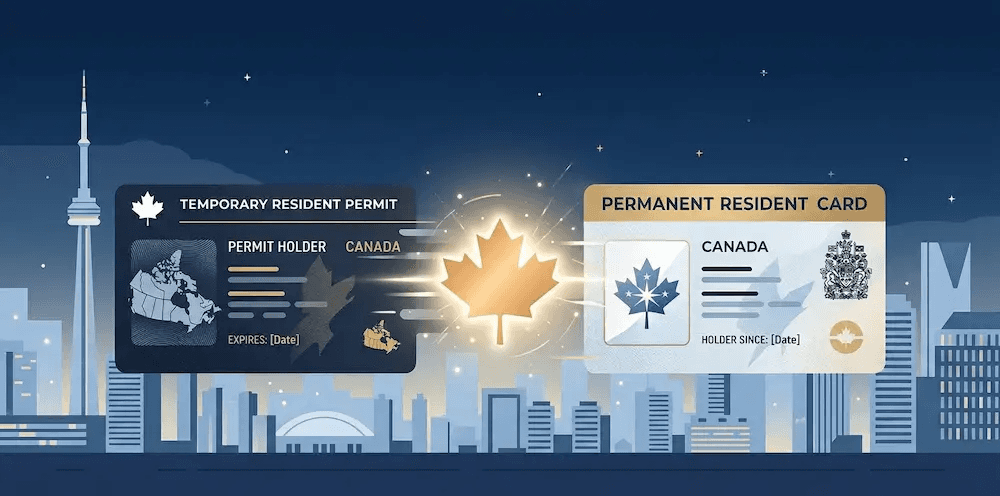
Canada quietly launched a brand-new TR to PR pathway Canada programme this week — and it could be your direct route to permanent residency. No more wondering if you'll have to leave. No more uncertainty about your future here.
Picture this: You're working in Canada, contributing to your community, paying your taxes, building a life. But there's always that worry in the back of your mind — what happens when my work permit expires?
If this sounds familiar, take a breath. Something significant just happened.
What Just Happened?
On March 6th, Immigration Minister Lena Metlege Diab confirmed that applications are already open for a special one-time programme. It's designed to give 33,000 temporary foreign workers a clear path to becoming permanent residents.
The programme runs for two years, with full details coming in April. The focus? Workers in in-demand sectors like healthcare, construction, skilled trades, hospitality, and agriculture — especially those in rural communities.
If you've been searching for a way to turn your temporary status into something permanent, this is it.
Why You Need to Act Fast: The 2021 Wake-Up Call
Let me tell you what happened last time Canada opened a programme like this.
In 2021, the government launched a temporary resident to permanent resident Canada programme with 90,000 available spots. The essential workers stream filled up in less than one day. Not one week. One day.
Thousands of eligible workers were locked out simply because they weren't ready when the portal opened. They hadn't gathered their documents. They assumed they had more time. By the time they tried to apply, it was over.
This year's programme has only 33,000 spots — less than half of 2021. Competition will be fiercer, and the window will close faster.
I'm not telling you this to scare you. I'm telling you because I've seen it happen, and I don't want you to be the person who misses out.
Who Is This For?
While we're waiting for IRCC to release complete eligibility requirements, the programme is designed for temporary foreign workers who are:
Working in high-demand sectors
Living and employed in rural areas
Already building strong ties to Canada — stable jobs, community connections, a life that's taking root here
If you're working on a work permit in one of these fields, you're likely in a strong position. International students who got their Post-Graduation Work Permit (PGWP) and are now working in eligible occupations could qualify too.
But eligibility alone won't guarantee you a spot. Preparation will.
What You Can Do Right Now
Even though the full application process hasn't been released, you can start preparing today:
1. Take an approved language test — IELTS, CELPIP, or TEF Canada. Almost every permanent residency pathway requires proof of language ability.
2. Get your education assessed — If you studied outside Canada, get an Educational Credential Assessment (ECA). This takes time, so start now.
3. Gather proof of work experience — Collect reference letters, pay stubs, T4 slips, and employment contracts showing your job title, duties, and duration.
4. Confirm your NOC code — Make sure your occupation falls under a National Occupational Classification code likely to be prioritised.
5. Keep your status valid — If your work permit is expiring soon, explore extension options. Losing legal status could disqualify you entirely.
Starting these steps now means you'll be first in line when official guidelines drop in April.
Mistakes That Could Cost You
Waiting for "more information" — If you wait until everything is officially announced to start preparing, you'll be weeks behind.
Assuming you qualify without checking — A consultation with a Regulated Canadian Immigration Consultant (RCIC) can tell you exactly where you stand.
Letting your status expire — Always apply to extend before your permit runs out.
Submitting a rushed application — IRCC doesn't give second chances. One mistake can lead to refusal.
What Happens Next?
Full details will be released in April 2026 — only weeks away.
If you're a temporary resident in Canada wondering how to stay permanently, this could be your answer. But only if you're ready when the time comes. When those 33,000 spots start filling up, there won't be time to catch up as there was none the last time such program launched.
Navigating Canada's immigration system can feel overwhelming — but you don't have to do it alone. Book a consultation with Elbrus Immigration Inc. today, and let's map out how you can qualify for TR to PR!